
Fire is on every preparedness list ever written, and almost everyone solves it with a gas station lighter tossed in a bag. Then they find out the hard way that a butane lighter in a stiff wind is a party trick, and that the one in the glovebox has been empty since last summer without telling anybody.
An arc lighter fixes the parts that fail. No flame for the wind to take, and no fuel to quietly disappear.
How It Actually Works
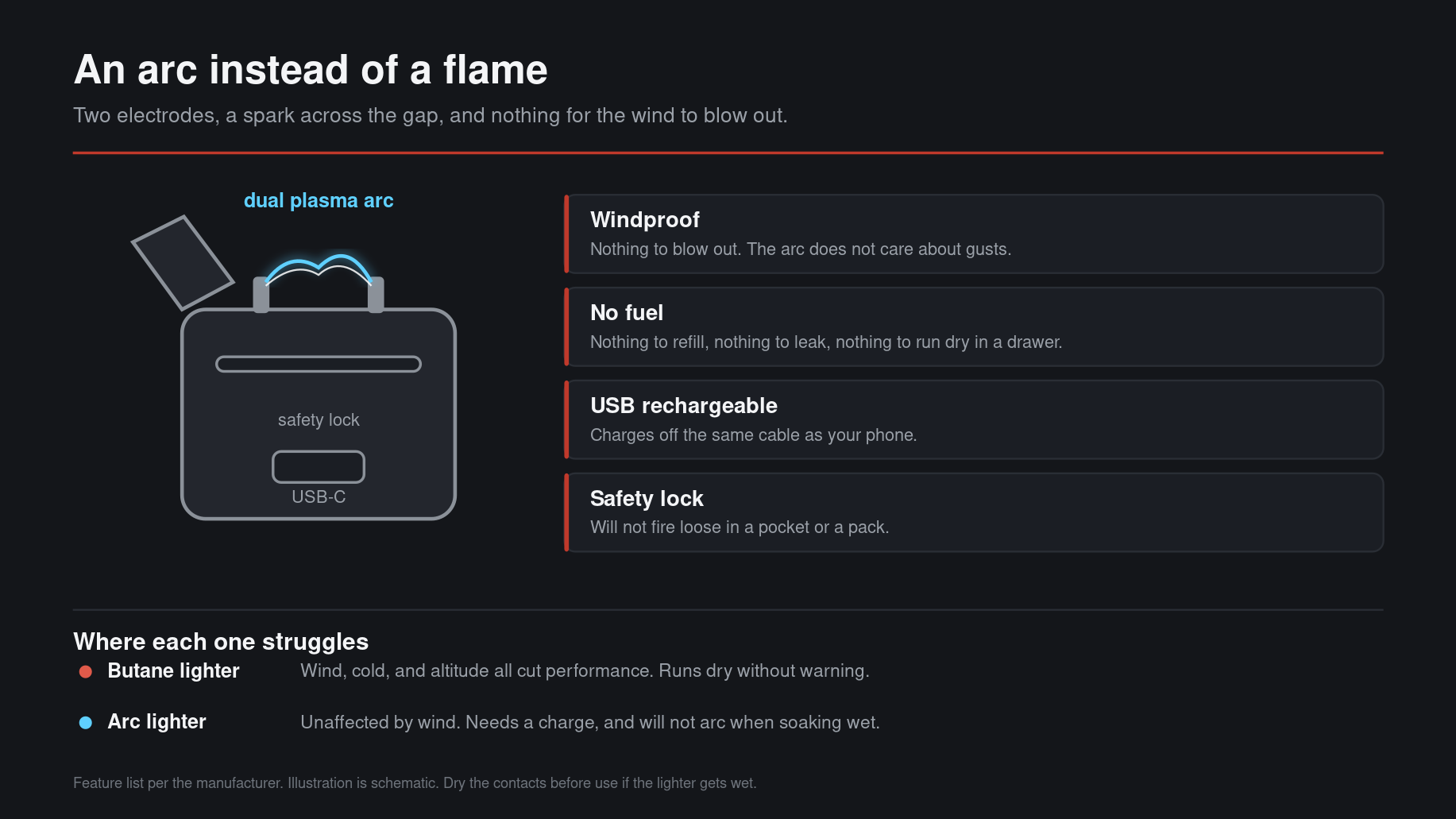
There is no flame at all. Two electrodes sit across a small gap, and pressing the button jumps a high voltage spark between them. That spark is plasma, hot enough to light tinder, paper, a wick, or a gas burner on contact. This one runs two arcs instead of one, which widens the area you can touch to whatever you are lighting.
Because the heat is an electrical arc rather than burning gas, wind does nothing to it. You can hold it in a gust that would kill a match instantly and the arc sits there unbothered. That is the single real advantage and it is a big one.
Cold is the other one. Butane loses pressure as temperature drops, which is why a disposable lighter gets unreliable in genuinely cold weather right when you need a fire most. An arc does not care what the thermometer says, as long as the battery has charge.
What Gunner Gear Lists
- Windproof, flameless ignition. The dual arc does the work.
- USB rechargeable, no fuel. Nothing to refill, nothing to leak in a pack, nothing to buy again.
- Safety lock. It will not fire loose in a pocket or a bag, which matters for something that lives in a kit.
- Slim metal body. Flat enough to disappear in a pocket or a pouch.
- Built for outdoor use. Marketed at campers, hunters, and emergency kits rather than as a novelty.
The seller backs it with a 30 day money-back guarantee.
Understand The Water Question
You will see arc lighters described as waterproof, and it is worth knowing exactly what that does and does not mean, because this is where people get caught out.
A sealed body keeps rain and splashes out of the electronics, and a good one survives getting soaked. That is genuinely useful. What it will not do is strike an arc while it is wet or submerged. Water conducts electricity, so instead of jumping the gap as a spark the current simply flows through the water and the arc never forms.
So treat it as weatherproof rather than underwater capable. If it gets dunked, shake it out, dry the electrodes and the contacts, and give it a minute before you expect it to fire. That one habit is the difference between this being reliable and being frustrating.
Honest Limits
- A dead battery is a dead lighter. This is the real trade. Butane fails gradually and you can shake a lighter to check it. A battery goes from working to nothing. Charge it on a schedule and treat the charge level as a thing you check, not assume.
- Never make it your only fire source. Our bag checklist says fire gets redundancy and we mean it. Pair this with a ferro rod and a few stormproof matches in a sealed bag. Three methods, three failure modes, and the odds of all three failing together are tiny.
- The arc is small. It lights tinder, kindling shavings, a cotton ball, a wick, or a stove burner. It will not light a damp log any more than a match would. You still need to build the fire properly.
- Lithium batteries dislike extreme cold. The arc itself does not care about temperature, but a very cold battery holds less charge. In deep winter keep it in an inside pocket rather than an outside one.
- Confirm price and shipping at checkout. The promotion advertises a limited discount but we could not see the figure on the order page. Read the total before confirming, and expect optional add-ons as with most offers in this format.
Who Should Get One
Get one if your fire plan is currently a single disposable lighter, which describes most people honestly. Get one if you camp or hunt in wind or cold, where butane is at its worst and this is at its best. It is also a sensible thing to keep in a vehicle kit, since there is no fuel to go stale over a couple of years.
Skip it if you want something that works with zero maintenance forever. That is a ferro rod, and it costs less. The arc lighter is more convenient. The rod is more foolproof. Carrying both is the actual answer.
Fire is the one capability where redundancy is not paranoia. This is a good second method and a very good primary one on a windy day.
See the Gunner Gear Dual Arc Lighter here.
Disclosure: Gear and Patriots has a promotional relationship with the seller of this product and may earn a commission if you order. That costs you nothing extra. This is an ignition source and gets hot enough to burn. Keep it away from children, do not defeat the safety lock, follow the manufacturer’s instructions, and never use any fire source where fire restrictions are in force. Specifications, pricing, shipping rates, stock, guarantee terms, and checkout offers are set by the seller and can change without notice, so confirm the details on their page before you order.