
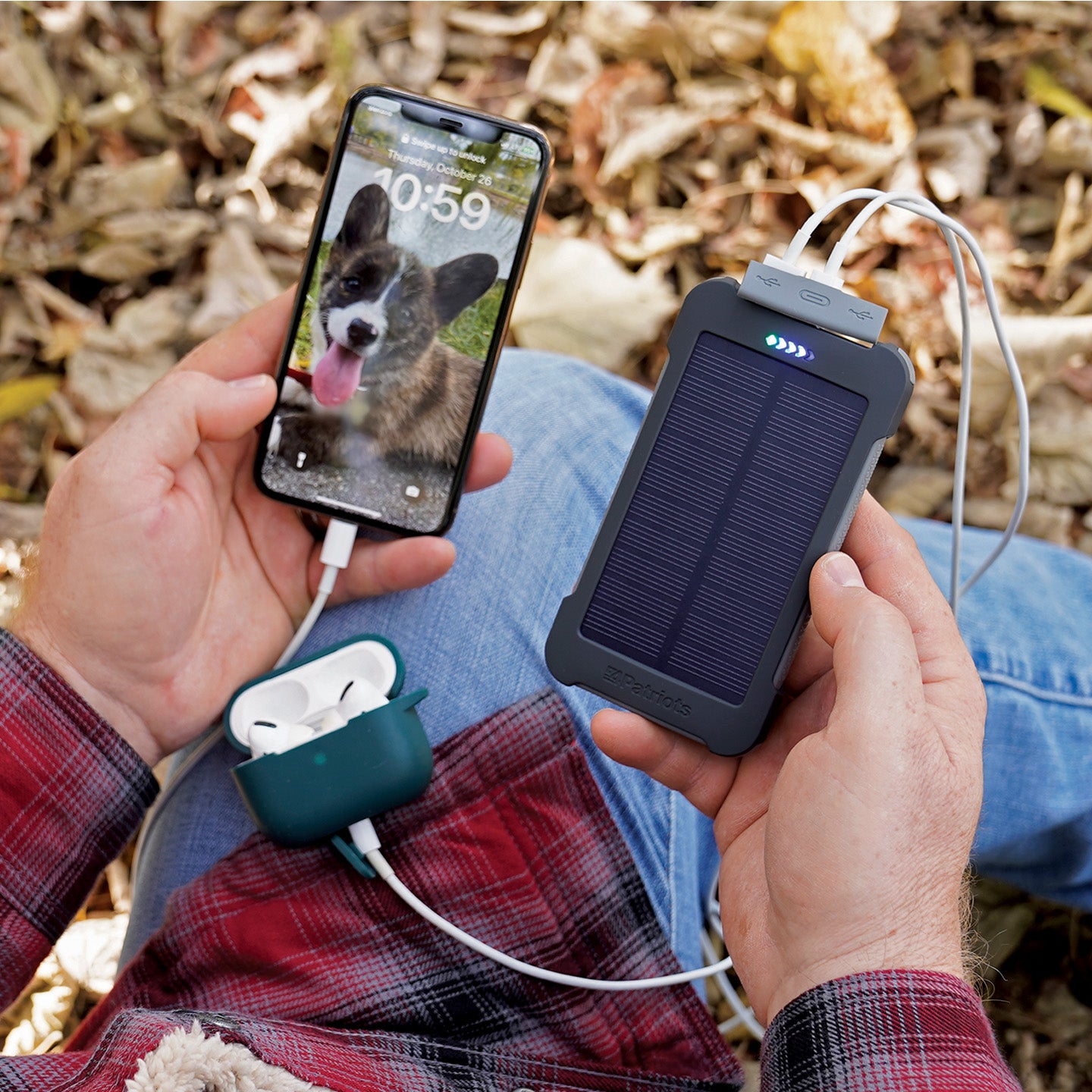
When the power goes out, the thing people reach for first is not a flashlight. It is a phone. Weather radar, a text to say you are alright, a call to someone who has power, the number for the utility company. All of it runs on a battery that was at 40 percent when the lights went out.
A charged power bank sitting in a drawer solves that for most of a week. This one is from 4Patriots, a preparedness company that has been around a long time, which already puts it ahead of most of what crosses our desk.
The Numbers That Matter
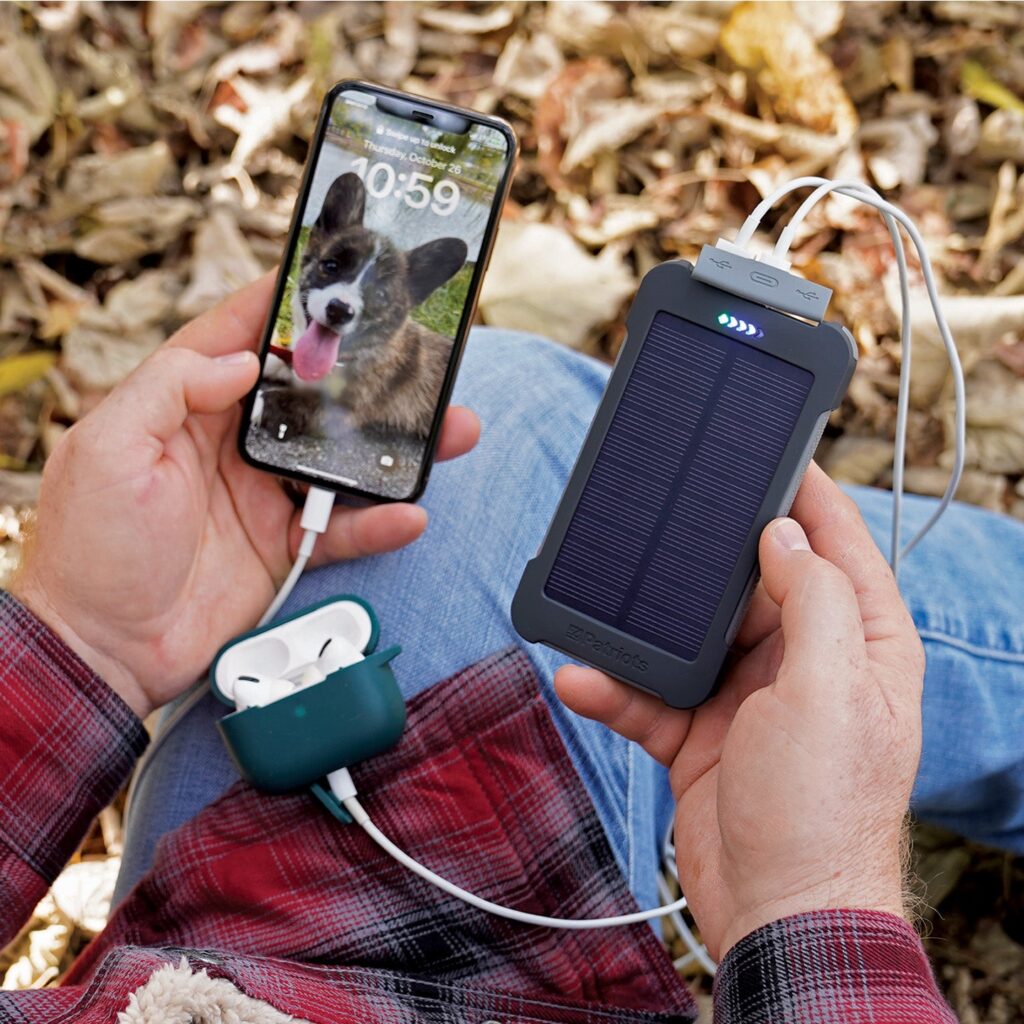
- 8,000 mAh. Enough to refill a typical phone several times over. For a three day outage with sensible rationing, that is the whole problem solved for one or two people.
- Three charging ports. Phone, headlamp, and someone else’s phone, all at once. In a household that matters more than raw capacity, because the argument over the one cable is the actual bottleneck.
- Three hour recharge from a wall outlet. This is the CX version and the faster charging is the main upgrade. It means you can top it up during a lull rather than leaving it plugged in overnight.
- Built-in LED flashlight. Not a replacement for a real light, but it means the thing in your hand already does two jobs.
- Rugged, weather resistant body. Rubberized corners and a sealed shell. It is built to live in a truck or a pack rather than a desk drawer.
Be Realistic About The Solar Panel
This is the part worth understanding properly, and it is the reason we are writing a whole section about it.
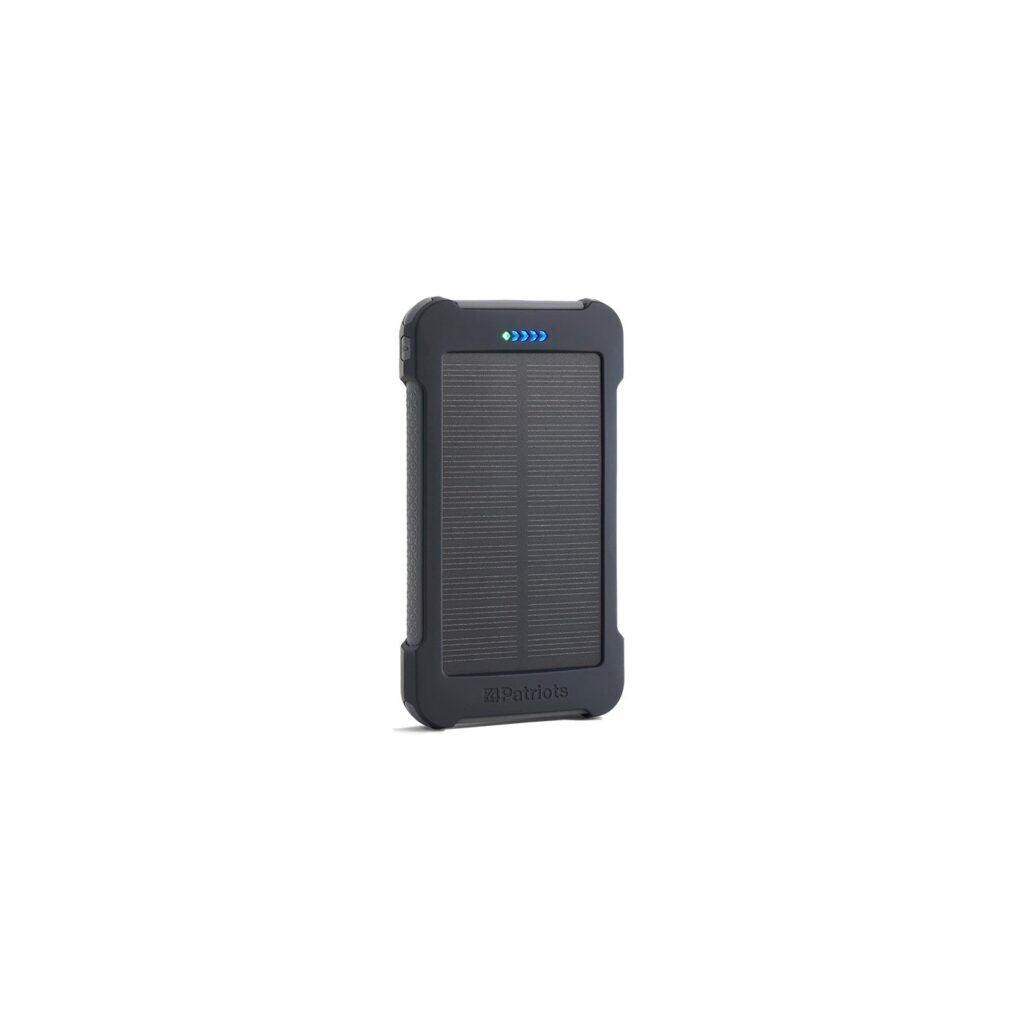
A solar panel the size of a phone screen collects a very small amount of energy. Filling an 8,000 mAh battery from empty using that panel alone takes many days of direct, unobstructed sun. It is not an afternoon. Reviewers of the earlier model measured charge times in the region of forty hours of good sunlight, and physics has not changed since.
To their credit, 4Patriots describes it accurately on their own product page. They tell you to charge it from a wall outlet and to use sunlight as a backup. That is exactly right, and it is how you should plan to use it.
So the solar panel is not the reason to buy this. It is insurance on top of the real feature, which is a charged battery you keep ready. In a long outage the panel will slowly claw back some charge on a sunny windowsill, and that is genuinely worth having. Just do not plan around it.
Where It Fits In Your Kit
Our off-grid power piece breaks the options into three tiers, and this sits firmly in the smallest one. It will not run a fridge or a CPAP. It keeps communication alive, which during the first few days is the thing that actually matters.
It also belongs in the bug-out bag, and one per vehicle is not excessive. The cost of a dead phone at the wrong moment is high and the cost of this is not.
Honest Limits
- A power bank you never charge is a brick. This is the failure mode, not the hardware. Lithium cells self-discharge slowly, so top it up every few months. Put it on the same reminder as your smoke detector batteries.
- Stated charge counts are optimistic. Capacity figures are measured at the cell, and conversion losses mean real-world output is meaningfully lower. Expect fewer full phone charges than the headline number suggests, which is true of every power bank on the market.
- Weather resistant, not a dive light. Rain and splashes are fine. Do not submerge it, and dry the port covers before plugging anything in.
- It will not power anything serious. Phones, headlamps, radios, and earbuds. Not laptops, not medical equipment, not appliances. That is a different tier of gear entirely.
- Confirm pricing and shipping at checkout. 4Patriots sells these individually and in multi-packs, and the per-unit price drops on the larger bundles. Read your total before confirming.
Who Should Get One
Get one if your current outage plan is hoping your phone was charged. Get two if you have a family, because one bank and four phones is a queue, not a plan. The multi-packs exist for exactly this reason and they are where the value sits.
Skip it if you already keep charged banks in the house and the vehicles. You have this covered, and a solar panel on the back is not a reason to buy another one.
Charge it this week, throw it in a drawer, and forget about it. That is the entire job, and it is one of the few pieces of preparedness that asks almost nothing of you after the first five minutes.
See the Patriot Power Cell and current pricing here.
Disclosure: Gear and Patriots has a promotional relationship with the seller of this product and may earn a commission if you order. That costs you nothing extra. We are not affiliated with 4Patriots. Capacity, charge times, and durability figures are the manufacturer’s published claims and we have not independently tested this unit. Solar charging performance depends on sunlight, angle, and conditions, and should be treated as supplemental. This device is not suitable for powering medical equipment. Specifications, pricing, shipping rates, stock, and guarantee terms are set by the seller and can change without notice.