
Everybody buys the light, the knife, and the fire kit. Almost nobody buys the thing that keeps all of it working.
Water is the quiet gear killer. One hard rain, one creek crossing, one cooler that tipped over in the truck bed, and the matches are mush, the phone is dead, and the dry socks you were counting on are the wettest thing you own. A regular pack does not stop that. It soaks it up and holds the water against everything inside.
Why This Belongs In Your Kit
We said it on the backpack page and it is worth repeating here. Water resistant is not waterproof. Every pack at a normal price point will eventually let water through the seams and zippers in a real downpour, which is why the standard advice is to put anything that absolutely must stay dry inside a sealed bag within the pack.
That sealed bag is this. Roll the top down three times, clip the buckle, and there is no path for water to get in. No zipper to fail, no gasket to perish, no electronics. It is one of the few pieces of gear with essentially nothing to break.
Where it earns its keep goes well beyond the water:
- Inside the bug-out bag. Documents, cash, medications, spare batteries, and a dry change of clothes. Our checklist calls for all of those, and every one of them is ruined by water.
- In the truck. Humidity and spills do slow damage over years. A sealed bag in the back keeps paperwork and a go kit in usable shape.
- On the water. The obvious one. Phone, keys, wallet, and a dry layer while fishing or paddling.
- As a water carrier in a pinch. A dry bag works in reverse. You can haul several gallons in one, which is a genuinely useful thing to be able to do when the taps stop.
What You Are Getting
- Roll-top closure with a side-release buckle. The standard design, and the reason it works.
- Heavy PVC shell. Thicker and more abrasion resistant than the thin nylon sacks, and it wipes clean. Heavier too, which is the trade.
- Double straps. Carry it over one shoulder or on your back, or clip it to a pack.
- It floats when sealed with air inside. Worth knowing if it ever goes over the side of a boat.
- Rolls flat when empty. Takes almost no room, so keeping one in the truck and one in the pack costs you nothing in space.
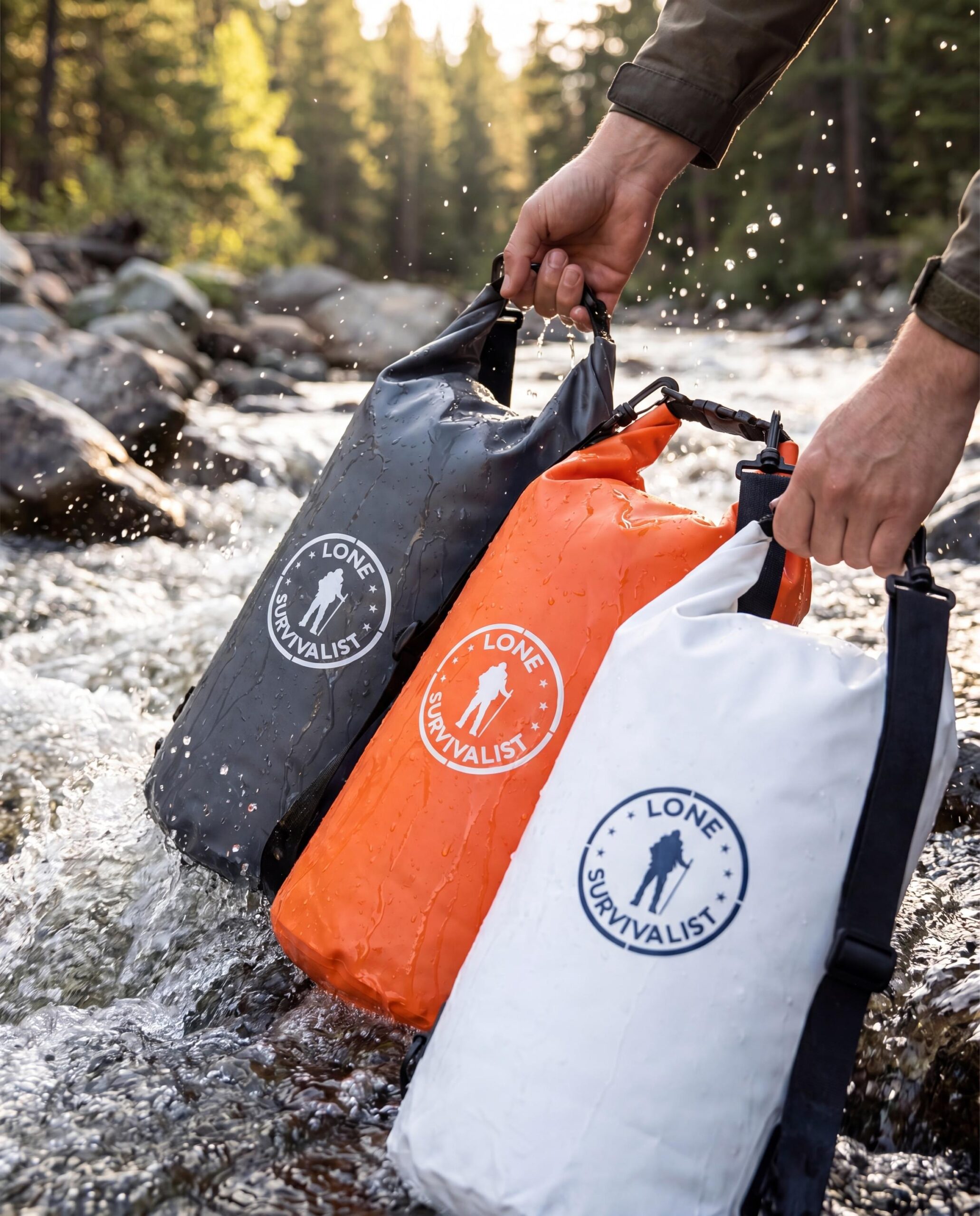
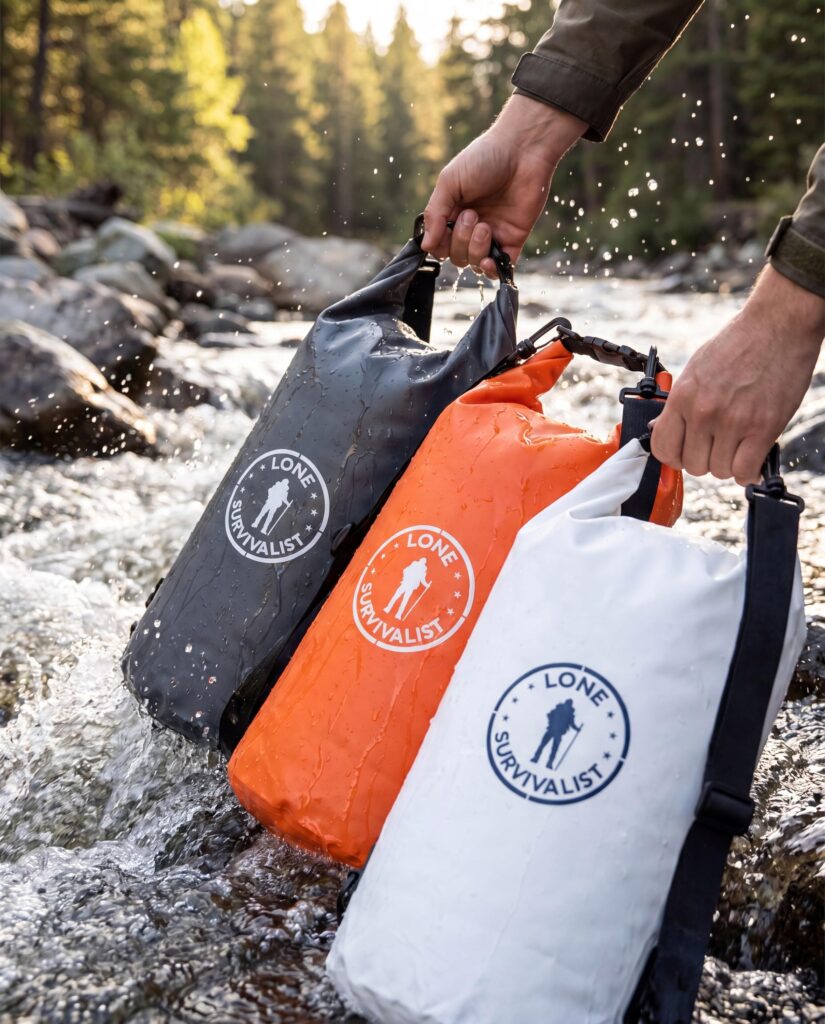
- Three colors. Black, safety orange, or white. Orange is the practical choice if it is ever going near water, because you want to see it float away.
Ships from Virginia. Price is $29 plus shipping for one, with lower per-bag pricing if you order several.
Ask One Question Before You Order
The single most important spec on a dry bag is its capacity in liters, and the sales page does not state it anywhere that we could find.
That matters more than it sounds. A 5 litre bag holds a phone, a wallet, and a fire kit. A 20 litre holds a change of clothes and a jacket. A 30 litre is a day’s worth of gear. They are not interchangeable and they are not worth the same money.
Check the size on the order page before you commit, and if it is still not listed, ask their support. Buying a dry bag without knowing its volume is the one way to be disappointed by an otherwise simple product.
Honest Limits
- Dry bags are a commodity. This is a simple product made by a lot of people, and comparable roll-tops are widely available. Have a quick look around before you order so you know what you are paying for, the same as you would with anything else.
- Roll it three times or it is not sealed. One or two folds will leak. This is the most common way people decide a dry bag failed when actually it was never closed properly.
- It is not a submarine for electronics. Fine for rain, spray, and a dunk. We would still put a phone in a zip bag inside it, because a pinhole you never noticed only reveals itself at the worst time.
- PVC gets stiff in the cold. Below freezing the material hardens and the roll gets awkward. Not a flaw, just something to know in winter.
- There are several add-ons at checkout. Expect offers for match kits, go bags, and fire starters, some of them at $39 to $79. All optional. Decline what you do not want and read your total before confirming.
Who Should Get One
Get one if you have a bug-out bag with paper, medication, or electronics in it and nothing protecting them. That is most people, and it is the gap this closes for the least money of anything in your kit.
Skip it if you already keep your essentials in dry sacks. One more is not going to change anything.
The gear you protect is the gear that still works when you reach for it. That is the whole argument.
See the dry bag and current pricing here.
Disclosure: Gear and Patriots has a promotional relationship with the seller of this product and may earn a commission if you order. That costs you nothing extra. No bag is a substitute for good judgment around water, and nothing here is safety or flotation equipment. Materials, capacity, colors, pricing, shipping rates, stock, guarantee terms, and checkout offers are set by the seller and can change without notice, so confirm the details on their page before you order.